
A custom kitchen can elevate your space and give it a look that is polished and packed with personality. But with the costs and time invested in designing a custom kitchen, you want to make sure that whatever aesthetic you choose, the project is done right. Hiring the right professionals is key, so it’s important to ask questions and research your options before you commit. For the best advice, 365 Collective called on three design professionals with decades of combined experience helping clients design their dream homes. Here are their top six tips for designing a custom kitchen you’ll say was worth every penny.
Prioritize function before aesthetics.
While it’s easy to get excited about the visual aspects of a kitchen, the most successful designs begin with a clear understanding of how the space will be used, advises Brianna Untener of New York City-based Brianna Scott Interiors, who has designed kitchens of all sizes for clients in the city, the Hamptons and the suburbs of New York and Connecticut. “Consider your daily routines, cooking habits, storage needs and entertaining style before making design decisions,” she adds. “A beautiful kitchen is important, but if it doesn’t function well for your lifestyle, it can quickly become frustrating over time.”

Make cabinetry an extension of the architecture.
“The most beautiful kitchens don’t feel like a collection of cabinets, they feel like an intentional extension of the home’s architecture,” says Lindsay Lucas, founder of Lindsay Laine Home based in the Finger Lakes region of New York. Incorporating details such as custom range hoods, furniture-inspired islands, arched millwork, decorative feet, reeded glass, brass mesh and integrated storage creates a layered, collected look that feels thoughtfully curated over time rather than simply installed. “The goal is to make the kitchen feel like it belongs to the home rather than standing apart from it,” says Lucas.


Use trends strategically.
When creating a custom kitchen, the intent is usually that the finished product is a space that will seamlessly fit into the architecture and design of the home, so try to avoid selecting anything too trendy, particularly if you aren’t doing a new build. “Cabinetry is one of the most significant investments in a kitchen, so it’s wise to choose millwork that feels classic and enduring,” says Untener. “If you’re drawn to current trends, incorporate them through elements that are easier to update over time, such as lighting, hardware, furnishings, tile or even island countertop materials. This approach helps ensure the kitchen remains relevant and beautiful for years to come.”
Mix materials for a richer, more collected, look.
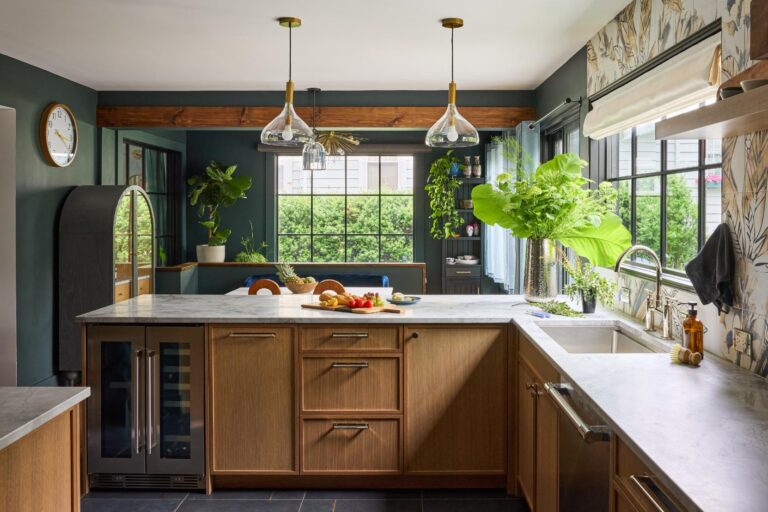
One of the most effective ways to create depth and character in a kitchen is by combining painted cabinetry with natural wood finishes, advises Lucas. “The contrast brings warmth, visual interest and a sense of authenticity that all-one-color kitchens often lack,” she says. “We love pairing painted perimeter cabinetry with a stained wood island or pantry, to create balance and give the space a more evolved, timeless feel. While Lucas advises her clients to vary the cabinets, whenever possible, she recommends they continue whatever stone countertop they choose onto their backsplash. It “creates a cleaner, more seamless look while adding a level of luxury that feels timeless and sophisticated,” she notes.


Consider the pantries.
Some of the most impactful design opportunities happen beyond the main kitchen. When space allows, incorporating a hidden pantry, scullery, coffee station, dry bar or wet bar dramatically improves the way a home functions, says Lucas. “Rather than treating these areas as secondary spaces, we design them with the same level of detail and beauty as the kitchen itself,” she adds, describing her firm’s creative process. “Often, these supporting spaces become the hardest-working and most-loved areas of the home.”
Focus on the details.
Customizing even a few details of your kitchen can give it a more curated and intentional look. If you can’t do a complete customization, consider focusing on a few key details, like countertops, backsplashes and millwork. “Together, these elements create kitchens that feel timeless, welcoming, and richly layered—spaces with character and soul rather than those that feel overly polished or sterile,” says Alexa Evans, who co-founded LTA Interiors, a design firm based in New York City and serving New York and Florida. They have helped clients with every level of kitchen customization, from face lifts to full rebuilds. She and designers and co-founders Lynn Berney and Tracy Gould have seen the benefits of selecting a few trends that have staying power and upgrading key elements to suit. The firm has seen a recent shift “away from stark, uniform materials in favor of stones with movement, veining and natural variation that create a more collected and organic feel,” says Gould. “Warm wood tones continue to be popular, adding depth and softness, while rounded edges on islands, countertops, and millwork introduce a sense of ease and flow,” adds Berney.